

The Roadmap Guiding Principles - Discovery
The Roadmap Guiding Principles - Discovery
The Roadmap Guiding Principles - Discovery
The Roadmap Guiding Principles - Discovery
Discovery, like the other five Reports, is a unique collaboration informed by the ICAA Technical Management Committee (TMC). It presents a collection of pathways and technologies that promotes a fresh thinking to optimise existing operating practice. It also uncovers a range of considerations that could ultimately support future copper supply, ESG initiatives, improved project planning, productivity and ultimately enhanced resource recovery. Applicable technologies to support discovery will depend on a range of factors including regional settings, orebody type, risk appetite and funding there is merit to explore a novel approach that could progress the development of alternative solutions for copper supply in the future.
The TMC guided the research to result in a Roadmap that adopts a practical stance by considering both complexities and dependencies across the discovery process. It acknowledges that numerous technological advances and strategies could be applied.
Disruptive and advanced technology adoption applied to copper discovery is continuously evolving and offers significant potential considering the pace of technology development, but needs to be balanced with investment appetite, and other practical considerations and skills that relate to the copper exploration process. The technology landscape is dynamic and ever-changing, and this warrants a review of a wide range of current, emerging and possible innovations.
Could there be a re-think in the way copper is explored and discovered noting the critical role of copper to the future?
It is this question that the research team set out to address, to explore what could be possible for break- throughs in technology adoption, management and business models. For example, for greenfield discovery, where location, risk and operating conditions may render the adoption of new processes more challenging, the research uncovered a range of advancements that could bring benefits to accelerated rates of copper discovery and orebody knowledge that could inform site energy consumption and emission output when developed.
Each Roadmap in the series has built on the concepts that were first introduced in Phase 1, Zero Emission Copper Mine of the Future Report (2020), which identified enabling levers that enhance the potential for innovation success and reduce risk in a complex and unpredictable global operating environment (Figure 33).
Figure 33 - Enabling levers to a zero-emission copper mine of the future
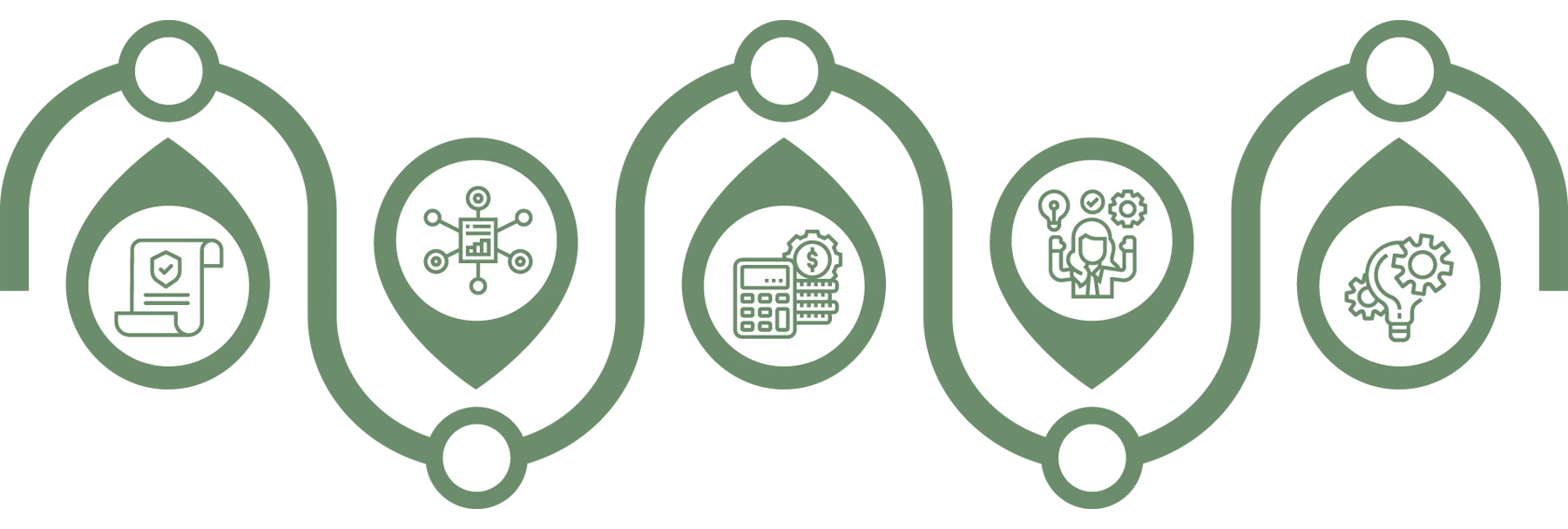
The Roadmap additionally considers systemic barriers to innovation and catalyst pathways outlined and developed in the Water Report (2021), Material Movement (2022), Mineral Processing (2023) and Ventilation and Emission Reporting (2024).
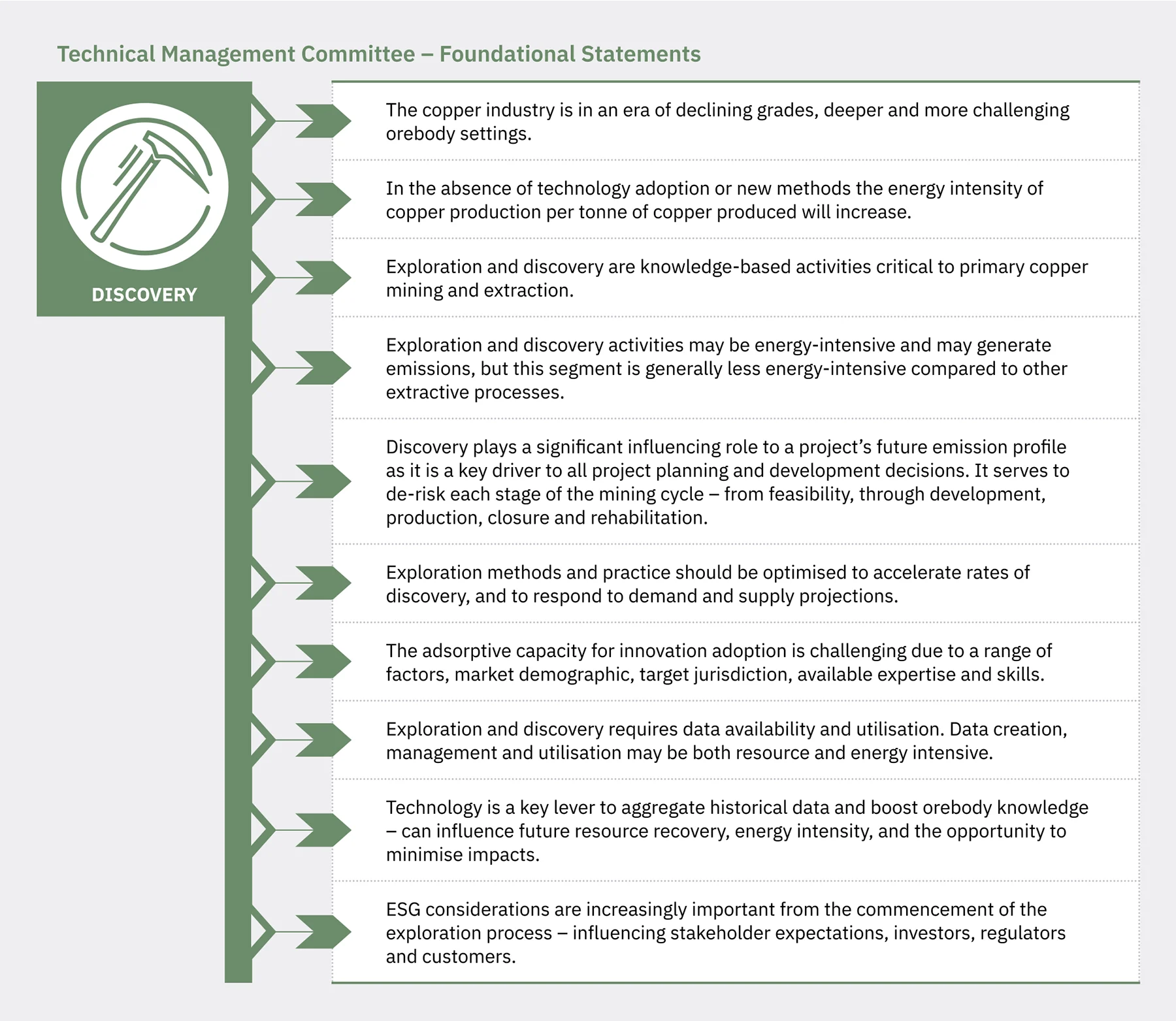
The TMC developed a series of guiding statements to underpin the Roadmap, that considered the definition of a copper orebody, broader industry trends, and connectivity between discovery to primary copper development and production. The statements also considered the role of technology, innovation and circular approaches. These statements significantly influenced the research hypotheses, and guided the selection of the Emission Impact Themes, the selection of relevant technologies and methodologies. This foundation ensures the Roadmap addresses current and emerging industry challenges while promoting sustainability and future developments.
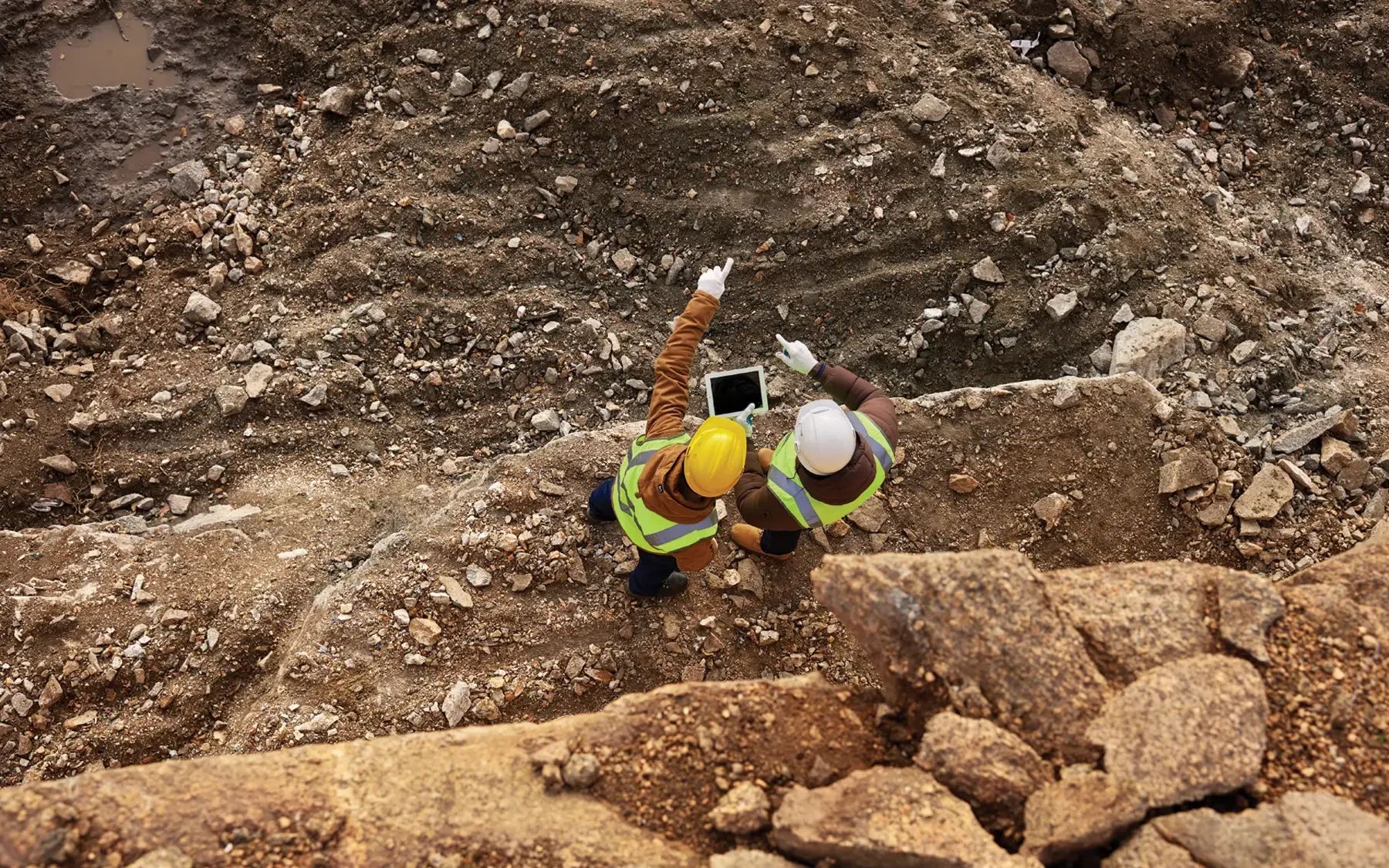
Exploration and discovery are knowledge based activities.
The key points of these statements are summarised in Figure 34 below.
Figure 34 - Technical Management Committee foundational statements
The Roadmap presents a broad suite of technologies for the copper industry that may be considered for application now and in the future. To enhance knowledge, the Roadmap and Technology Guides for each Emission Impact Theme provide adoption pathways and presents real-world examples of activity towards demonstration and impact across select themes.
The Roadmap has been structured in a way to input into CopperConnect – A platform to harness the collaborative intelligence of the copper industry. Like CopperConnect, the Roadmap follows the FAIR principle to ensure findings are easily discoverable, interoperable and reusable to help drive innovation and improve efficiency in the industry.
A methodology was applied that was developed in previous Roadmap to Zero research. This consistent approach explores a useful, sensible, and realistic application of new technology to the upstream copper industry. The TMC considered a range of aspects under each emission impact theme, including:
The unknown: challenges to overcome, threshold technical considerations, or barriers that could present fatal flaws for technology adoption.
Opportunities: the potential upside, step change in resource recovery, or performance that the technology could offer.
Interdependencies: critical aspects of the technology that need to be better understood in an operating context.

