

- Provide guidance on calculating absolute emissions (Scopes 1, 2 and 3) from the value-chain
- Provide a way to calculate emissions intensity along the supply chain
- Enable real product differentiation for low-carbon materials
- Bring producers, capital providers and buyers together and in alignment, de-risking first movers and supporting take up of the framework across the mineral and industrial sector
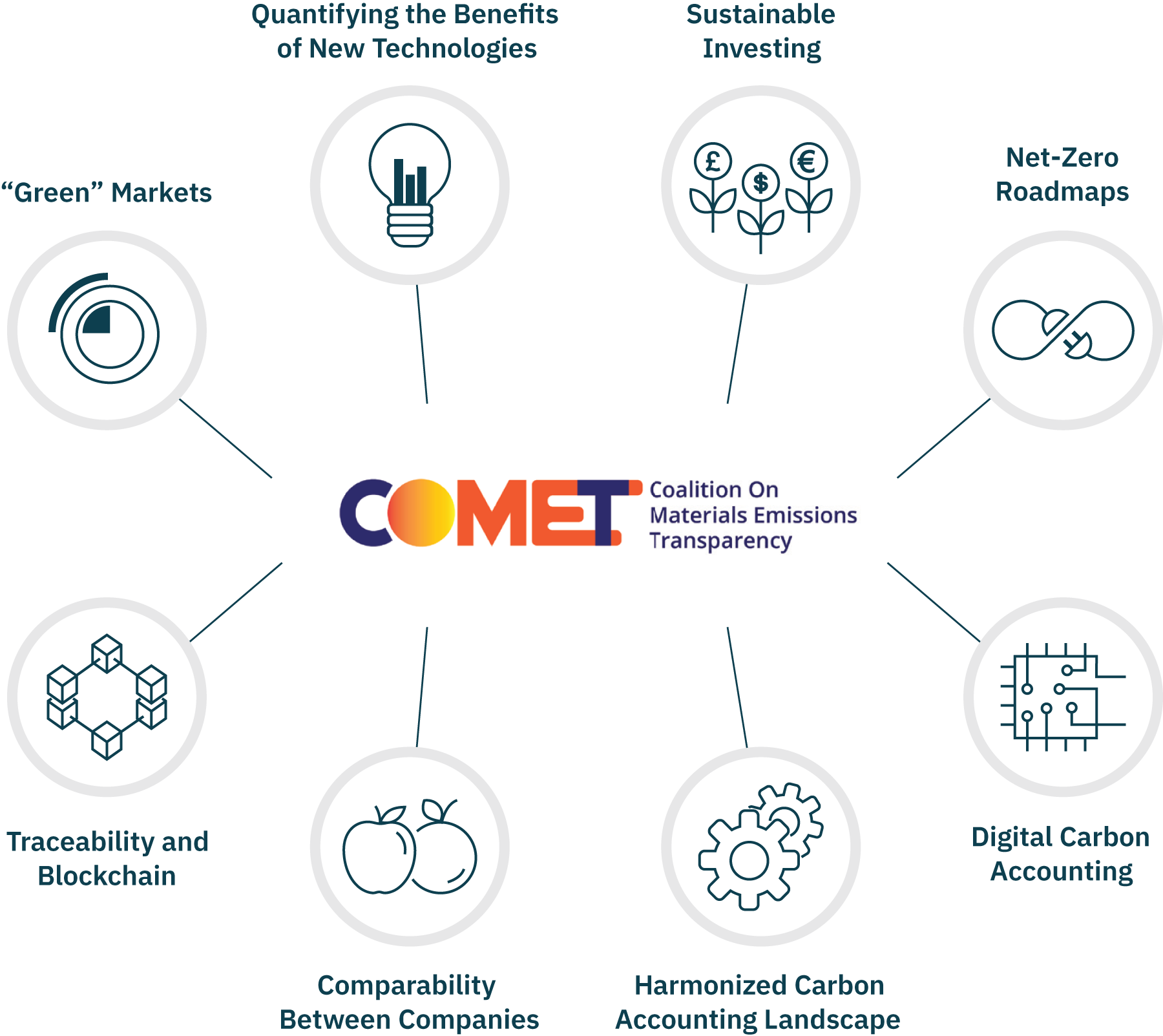
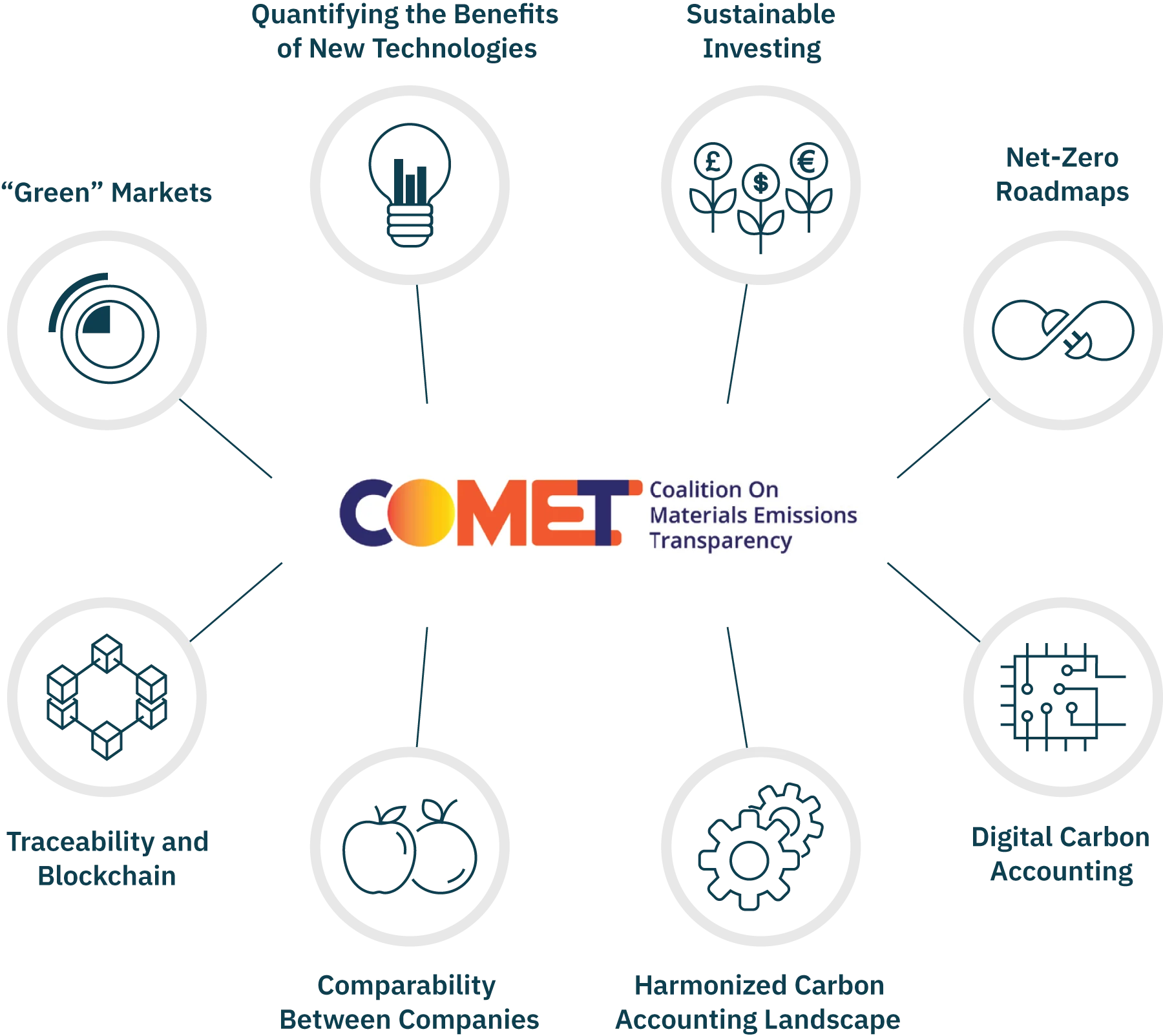
The proposed framework will address both GHG disclosure and broader ESG reporting metrics and will be based on the GHG Protocol, with better definition and quantification of sustainable production across the supply chain. In 2021, the UNFCC partnered with COMET to support the development of this harmonised accounting framework. COMET notes that ‘companies currently need to reframe their GHG data to satisfy the requirements of each framework, which could have different requirements for scope, coverage, attribution, boundaries and type of GHG. COMET undertook a study of the IPCC reporting framework, and the practices in key countries, finding significantly different results in categories, granularity and greenhouse gases reported.82
The COMET approach includes commodity-specific reporting, supported by life-cycle analysis, modelling tools and net zero pathways with sensitivity analysis to map out different production methods for key mineral supply chains, including copper. The framework aims to enable new technologies and market tools to achieve decarbonisation through standardised accounts and disclosures.83 The COMET framework is still in development, with industry and research partnerships forming.
Figure 19 - The COMET Framework