


Ore sorting, sulphide flotation and bioleaching
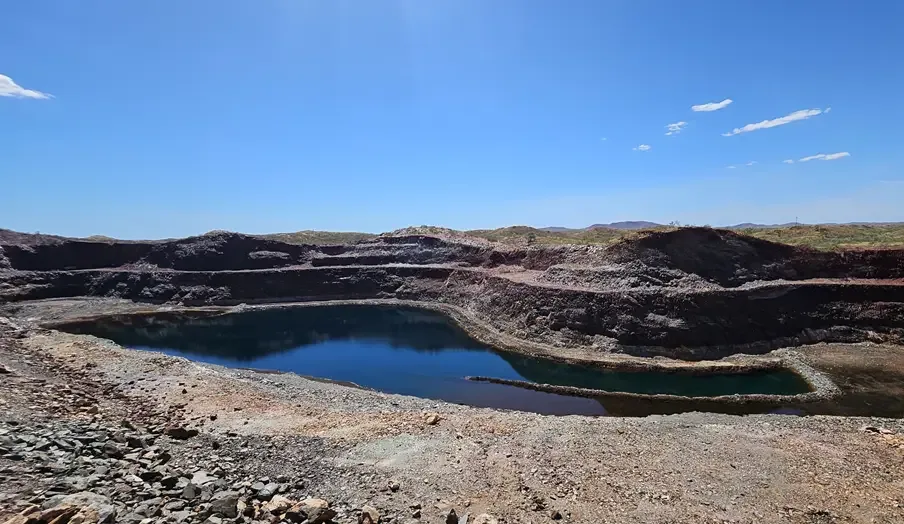
The Pilbara is iron ore country. But 120 kilometres east of Karratha, Anax Metals is pursuing a very different story at its Whim Creek copper-zinc-silver project with volcanic-hosted massive sulphide (VHMS) deposits that reward metallurgical sophistication over bulk processing. Anax's processing strategy centres on industry standard sulphide flotation, supported and enhanced by two technologies: sensor-based ore sorting and bioleaching. Together, and in the right sequence, they are designed to do something that has long eluded base metal developers — make marginal material pay.
The plant at the centre: An industry standard base metal Concentrator
At the heart of the Whim Creek flowsheet is a base metal concentrator using differential flotation to produce separate copper, zinc and silver/lead concentrates for sale to international smelters.
Flotation is proven and effective, but it is sensitive to feed quality. Dilute the mill with too much waste rock and the economics deteriorate rapidly: throughput requirements climb, reagent consumption rises, tailings volumes grow and concentrate grades slide. In a VHMS deposit like Whim Creek, where high-grade mineralisation sits alongside lower-grade and barren material, feeding the mill indiscriminately would undermine the entire operation.
Ore sorting addresses this directly and significantly de-risks the whole operation.
Ore Sorting: Decoupling Mine from Mill
Modern sensor-based sorters using X-ray transmission, or a range of other sensors assess individual rock fragments at conveyor speed and route each piece in milliseconds via compressed air jets. The result is continuous, automated pre-concentration of ore before it reaches the grinding circuit.
The most strategically important benefit at Whim Creek is the ability to decouple mining from processing. In a conventional operation, the mill sets the pace, and everything upstream conforms to it. Ore sorting breaks that dependency. Mining can proceed at rates dictated by mining economics — maximising equipment utilisation or accelerating access to high-grade zones — while sorted ore inventories (with increased grades) buffer against variability before the concentrator. Waste is rejected early and cheaply, before the costs of grinding, flotation, water and reagents are incurred. And the concentrator receives a higher-grade, more consistent feed, enabling it to be sized and optimised accordingly — with meaningful reductions in both capital and operating cost.
Between the high-grade fraction that goes to the mill, and the rejected waste lies a middlings fraction: material with intermediate metal content that does not justify full flotation processing but carries value for technically astute players. At Whim Creek, Anax has identified it as an opportunity and bioleaching as the technology to unlock it.
Bioleaching: Nature's Metallurgy at Industrial Scale
Bioleaching uses naturally occurring acidophilic bacteria to oxidise sulphide minerals and liberate contained metals into solution. The bacteria derive energy from the oxidation of ferrous iron and reduced sulphur compounds, attacking the sulphide mineral lattice in a self-sustaining process that can be optimised through control of temperature, pH, aeration and nutrients. The dissolved metals are then recovered by solvent extraction and electrowinning (SX-EW) to produce high-purity cathode metal and zinc sulphate crystal.
Bioleaching is not experimental technology. Commercial operations have been running since the 1980s, and global copper production from bioleach circuits now exceeds 500,000 tonnes per year. The process is well-suited to the Whim Creek middlings: it is low capital-intensity compared to a mill circuit, tolerant of fine-grained and complex mineralogy, and can operate as a parallel stream alongside the concentrator without disrupting primary processing. Material that would otherwise be stockpiled indefinitely becomes a continuous source of cathode copper.
Copper bioleaching has historically worked well on secondary sulphide minerals like chalcocite and covellite. Primary chalcopyrite is a different proposition and Anax has developed a proprietary bioleaching process specifically engineered to overcome chalcopyrite passivation. Through a combination of process chemistry innovations, bacterial culture optimisation, and controlled leach conditions that inhibit passivating layer formation, the company has demonstrated the process delivers attractive leach kinetics and copper recoveries from chalcopyrite. The specific process details remain commercially confidential, but the technical outcome is clear.
The commercial implications extend well beyond Whim Creek. Chalcopyrite accounts for the majority of global copper reserves. Hundreds of deposits sit stranded or sub-economic partly because of the difficulty of treating this mineral. Operating heap leach mines face the transition from amenable secondary sulphides to refractory primary ore below. Tailings facilities worldwide contain decades of accumulated chalcopyrite that conventional processing left behind. A proven, proprietary chalcopyrite bioleach process addresses all of these scenarios.
This makes Anax something genuinely unusual in the junior mining sector: a company with both a development asset and a proprietary process technology, each capable of generating independent value, and each strengthened by the other.
An Integrated Flowsheet, A Compelling Proposition
The three elements of the Whim Creek flowsheet work together as a coherent system. Ore sorting routes high-grade material to the concentrator, rejects waste early, and directs middlings to the bioleach circuit. The concentrator produces copper, zinc and silver/lead concentrates on an upgraded, consistent feed. Bioleaching recovers additional copper and zinc from the middlings as cathode, via SX-EW, without smelter treatment costs.
The result is a more resource-efficient, capital-efficient and flexible operation than a conventional mill-only approach — one well suited to the variable mineralogy and conditions of the Pilbara VHMS deposits. And the chalcopyrite bioleaching technology whose value, if the addressable market for global copper treatment solutions is considered, is not captured in any conventional resource valuation of Whim Creek alone. In a sector where brute force has long been the default, Anax is making the case for intelligence. It is an argument worth watching closely.
Contact at Anax Metals: Geoff Laing
About ICAA:
The International Copper Association Australia is the peak body for the copper industry in Australia, representing some of the country’s most influential companies in mining, manufacturing, production and recycling.
ConnectOre is an industry-wide collaboration to unlock innovation, advance responsible practices, and tackle mining industry challenges that are beyond the scope of any single organisation
Get Involved https://connectore.org/
