



Scope 3 Emissions Accounting and Reporting Guidance
Scope 3 emissions are the emissions produced in a company’s value chain, not from the operations activities. Produced by the supplier and industrial customers, Scope 3 emissions make up most of a mining company’s total emissions, in some cases, accounting for 95 per cent.67
The ICMM released their Guidance for Scope 3 emissions accounting and reporting in September 2023. This Guidance has been developed to provide the mining and metals sector with direction on how to account and report on their Scope 3 emissions on an annual basis. ICMM’s Guidance follows five principles outlined in the GHG protocol, including relevance, transparency, consistency, completeness, and accuracy. These are applied to mining-specific contexts to promote a consistent process in annual emission reporting.
In addition, the Guidance outlines four dimensions for mining and metals to address, including data improvement, materiality, calculation methodologies and boundary definition. ICMM has chosen 15 Scope 3 categories, as shown in Figure 17.
Figure 17 - ICMM Scope 3 Emission Categories
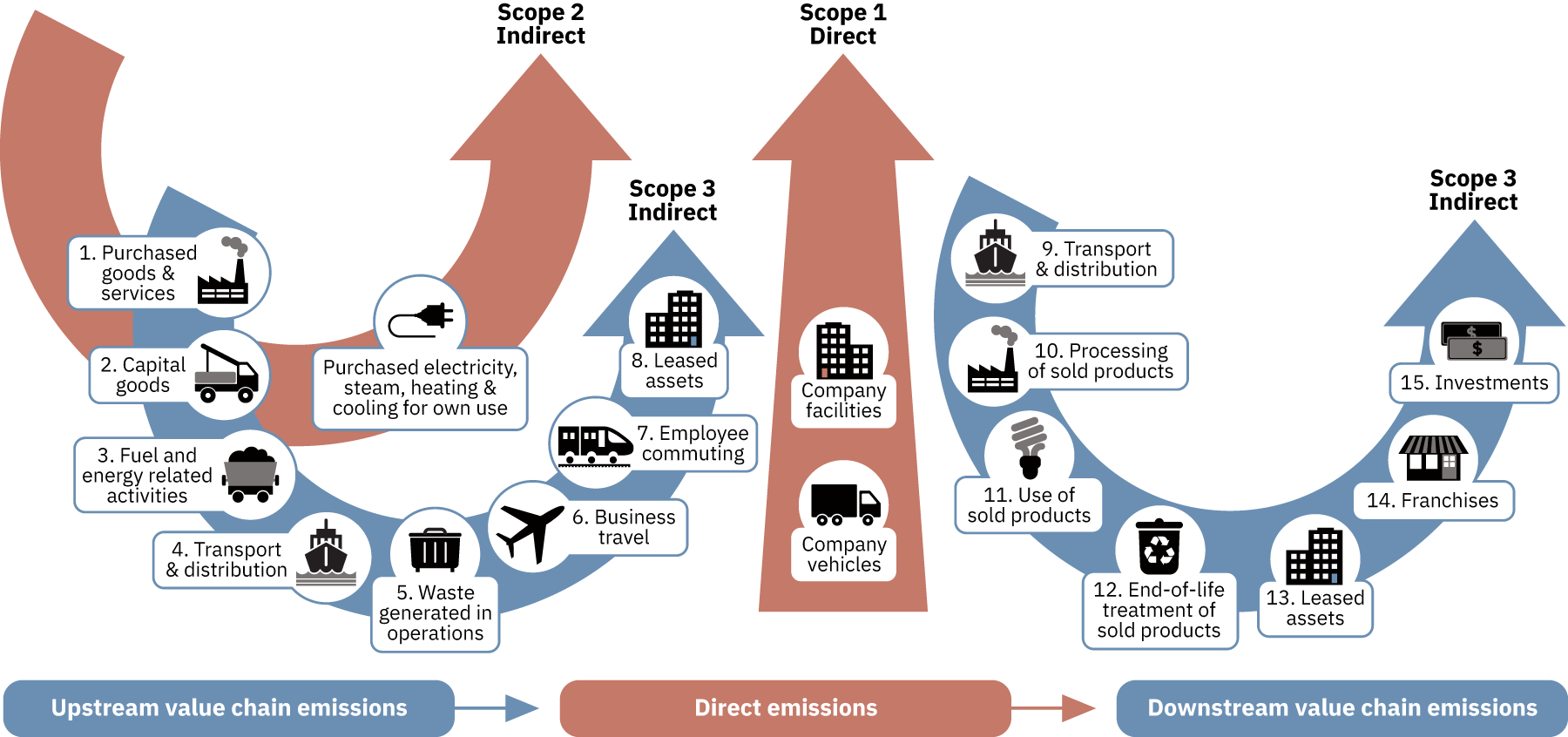
A company must gather the relevant data and complete calculations to identify which categories are material and, in turn, report accordingly. A category is material if it surpasses the 5 per cent referential quantitative threshold.68
Figure 18 - ICMM Scope 3 Reporting Stage Guidance
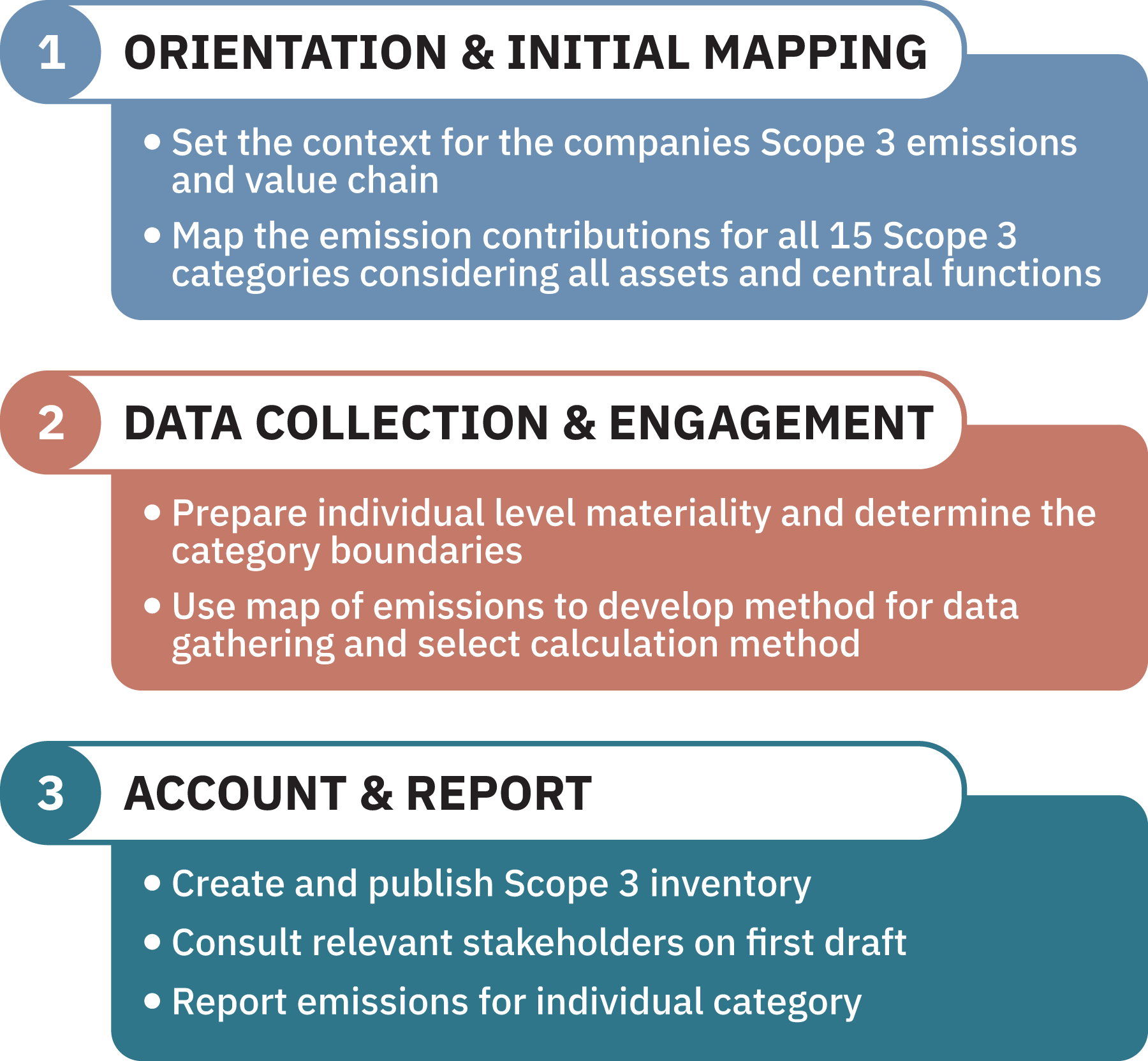
Figure 18 presents the three-stage process for a new company to produce their first Scope 3 emission report. It outlines how a new company is directed to report on their emissions and select their categories to report on.
The ICMM’s Guidance for Scope 3 emissions is a structured framework designed to support mining companies in disclosing and calculating their value chain emissions to improve transparency and accelerate action to reduce GHG emissions in line with the Paris Agreement. It facilitates year-on-year comparisons to help companies to identify ‘hotspots’ across their value chain emissions.
Natural Capital Accounting
Natural Capital Accounting (NCA) is an approach used to assess and measure the environmental impacts and economic value of natural resources and ecosystems, considering their contributions to human well-being and the economy. NCA is an emerging area that may affect the reporting of emissions at copper operations in the future. NCA integrates economic and environmental data to better understand the environmental assets and ecosystem services provided by nature. As with the Paris Agreement, government commitments to the Kunming-Montreal Global Biodiversity Framework — that aims to halt and reverse nature loss by 2030 — will see expectations on companies to measure, assess and report nature-based disclosures.
NCA frameworks help describe changes in ecosystems and how these impact a business, including methods to factor the impacts into decision-making processes. NCA provides objective, standardised methods to quantify the state and trends of ecosystems, ecosystem services, and integrated assessment tools. At the global level, the System of Environmental- Economic Accounting (SEEA) Standard provides a framework to integrate economic and environmental data to better understand the interrelationships between the economy and the environment and is overseen by the United Nations.69
In addition, the Capitals Coalition developed the Natural Capital Protocol to harmonise existing approaches and provide a framework to undertake an NCA assessment. The protocol includes emissions accounting as part of an accounting system and refers to value-chain scope definitions for greenhouse emissions. However, this is a broad approach without specific reference to the mining sector.
The Canadian Government undertook an early study into NCA within the mining, oil and gas sectors, establishing a method to include subsoil minerals as natural capital input to production processes.70 The study set out to better understand the contribution of natural capital to economic growth and how adding natural capital impacts productivity measurements. It concluded that in the Canadian example, natural capital contributed significantly to economic growth.
The CSIRO has released a Natural Capital Handbook to guide Australian companies in measuring and incorporating natural assets into financial decisions. This has been developed in alignment with existing corporate financial reporting equivalents and the international System of Environmental-Economic
Accounting Standard (SEEA).71 The handbook supports entities that own or control significant natural capital assets, such as mining companies. This handbook includes greenhouse gas emissions to be considered in natural capital impact registers, impact statements and natural capital risk registers.
In Australia, BHP engaged Syrinx to undertake a pilot study on NCA in the mining industry in partnership with CRC TiME, Curtin University, CSIRO, The University of Western Australia and The Western Australian Biodiversity Science Institute. The site selected, Beenup mineral sands, allowed NCA to be trialled at the pre-mining, operational and closure phases. BHP recognised that it manages large areas of land and water, providing opportunities for nature-positive actions and outcomes. The pilot also aligned with the TNFD and noted that the mining sector would require a specific set of natural capital accounts, similar to the sector specific SASB standard, primarily due to the method of valuing mineral resources, the long scale of land ownership in mining leases and the long-time horizons for these.72 Further outcomes from the pilot found that the SEEA framework provided the classifications and criteria for land, ecosystem types and ecosystem conditions, while the Natural Capital Protocol provided the impact and dependency pathways and materiality assessments. The pilot also noted the extensive data sets required to produce natural capital accounts, which would likely impact smaller producers yet to report against the broader sustainability and accounting frameworks.
In September 2023, the Australian Government released a series of case studies on TNFD, including a case study on critical mineral mining for producing clean energy technologies, using the TNFD Piloting Guide.73 This case study outlines value chain impacts in critical mineral mining, value chain dependencies, risks and opportunities, and proposed actions. This case study could provide a relevant example to the copper industry.
Of the benchmarked companies, few reported in alignment with the TNFD (8 per cent), indicating that further engagement with nature-based accounting will be required across the sector.
The Safeguard Mechanism – Australian Clean Energy Regulator
Under the Australian National Greenhouse and Energy Reporting Scheme (NGER), the Safeguard Mechanism requires the highest emitting facilities to keep Scope 1 emissions below a baseline limit. Should the facility fail to do this, there are requirements to manage excess emissions and/or pay penalties.
The Safeguard was reviewed and revised in July 2023 to align with the Australian Government’s climate targets. This means emissions limits tighten each year in line with reduction targets, a trajectory consistent with achieving Australia’s emission reduction targets of 43 per cent below 2005 levels by 2030 and net zero by 2050. The review also introduced a total cap on CO2e for the reporting facilities.
The Safeguard applies to any sector except electricity (managed with a different baseline), where a facility emits more than >100,000 tonnes of CO2e, including mining.
The Safeguard is also now incentivised, as facilities that stay below their gross GHG baseline limit can receive Safeguard Mechanism Credits (SMCs), with 1 tonne of CO2e per SMC. If a facility fails to meet the baseline, it can purchase or surrender these credit units, creating a carbon trading scheme. This provides greater flexibility to meet targets and increase incentives to cut emissions. It is noted that SMCs are traded and reported under the same use and treatment as Australian Carbon Credit Units (ACCUs) in terms of registration, transfer and reporting.74 At present, international carbon credit units cannot be applied to reporting facilities.
Previously, legislation allowed a maximum penalty cap of 10,000 penalty units for emissions exceeding the baseline limit during a financial year. The revised Safeguard Mechanism instead calculates penalty units as the difference between the facility’s total net emissions and the baseline to better reflect the level of non-compliance.
Any entity registered with the Australian National Registry of Emissions Units (ANREU) can buy and sell SMCs, as with ACCUs. A growing carbon market may be of interest to the sector to help manage emissions into the future, alongside the implementation of technology and processes to reach stated emissions reduction targets and the net zero goal 2050 (Scope 1 and 2) of the International Copper Association.
Air Quality and Social Licence
Community acceptance of the copper mining sector is affected by a number of factors, with air quality being one key factor. Social licence in mining is critical to the sector’s growth in response to increased demand for copper. Dr Lacey, head of the CSIRO’s Responsible Innovation Future Science Platform, notes that social licence is more powerful than governments and regulators. Studies have indicated that the loss of social licence in mining can reduce the market value of a project by up to 70 per cent.75 Innovations that support a Roadmap to Zero, including a reduction in greenhouse gas emissions and improving air quality, bring positive social benefit.
Air quality, including particulate matter, heavy metals, and dust, can be one of the most challenging issues for copper mines to manage. The rise of new technologies, such as dry stacking of tailings, demonstrates the complexity of innovation and air quality control. While dry stacking positively impacts water usage, it can present complications to air quality through increased dust emissions.
Examples of air quality impacts on communities are recorded across the copper industry, including:
- Papua New Guinea – Air pollution is rated as moderately unsafe, with the annual mean concentration of PM2.5 exceeding the recommended maximum of 10 μg/m3. Air pollution is the primary cause of pollution-related deaths. The mining industry is reported to be one of the significant emitters, and there is a lack of regulation to control this, as seen with the long history of environmental damage from mining.76
- Zambia – An article published in the National Library of Medicine (USA) described the long-term impacts on air quality from copper mining in Zambia, looking at the effects on human health, plants, animals and infrastructure. The primary air pollutants were PM and SO2, mostly from mine dust blown from waste rock, overburden, and tailings dump sites. Controls recommended included baseline scientific investigation using remote sensing, research into the efficacy of hazard control technologies, changes to OELVs and critical studies into the characterisation of PM from the mine environments, including acid rain, dust deposition on leaves and soils, heavy metal contamination on crop growth and soil function.77
- Chile – A study published in the journal of Biomedical Health stated that the proximity of copper and gold mining in Northern Chile had increased the risk of respiratory disease to children. The study suggested that the most important factors would be emission control and reduction at the emission source.78
- Australia – Several mines have exceeded air quality limits, including dust pollution, with Mount Isa named the ‘most polluted postcode in Australia’ by the ACF. Legacy sites have also been found to have emitted heavy metals, including lead, requiring ongoing remediation and public health monitoring.
- USA – A study on air quality and copper mining and milling in Arizona found that consumer surplus degraded from dust-polluted air between $116m and $169m (willingness to pay and property values).79
The BDO 2023 Near Future of Mining report notes that technology to reduce the environmental footprint of mines will increase as regulatory controls increase, supported by increasing investment in information technologies and AI, including sensors. The potential for blockchain technology to trace the source of materials may present an opportunity for companies to improve their real time monitoring of air quality, including greenhouse gas emissions, to maintain investor and community confidence.
Gone are the days when miners could simply explore for minerals. Looking ahead, successful miners will be those that also mine for innovation.80

Sunset in Australian outback.
ESG Reporting and Investment
Many investment funds now consider emission reporting factors as a core part of their risk assessment criteria. This could include assessment linked to the physical risk of climate change as well as the reputational risks of inaction or regulatory and compliance risks. Resources companies are experiencing rapid changes in expectations of emission reporting. In recent years, emission or broader ESG reporting has gone from something that was desirable to something that is critical to attracting and retaining investment capital.
While the TCFD specifically addresses climate-related financial disclosures, several jurisdictions are seeking to embed broader ESG financial disclosures such as those in development by the TNFD. The EU is currently looking to embed sustainability disclosures into its financial policy, with a standard taxonomy, a green bond standard, benchmarking standards and an international platform on sustainable finance.81
A clear finding from the review of reporting frameworks and benchmarking company reports is the need for consistent and comparable data on emissions with a harmonised carbon accounting method. The numerous reporting frameworks and financial accounting disclosures present a real risk to harmonisation and an inability to compare, accurately report progress and improve accountability for emissions targets.
The challenge for the industry to navigate the broad range of existing and emerging regulatory and market regimes could influence long-term financial sustainability. The proliferation of emissions verification frameworks can also lead to concerns of greenwashing and increase the burden and exposure for companies to meet the requirements of multiple and inconsistent frameworks. This lack of harmonisation is also hampering efforts towards achieving real decarbonisation.84
With a significant number of copper companies already adopting standard reporting frameworks to better define, measure and understand their GHG emissions and reporting these against international standards, the sector is well placed to continue to align with innovation and best practice developments in reporting to realise the benefits of social licence and investor confidence in the face of booming demand.
Further benchmarking of the sector’s progress, the relationship to additional codes of practice in development (such as the JORC code),85 and an audit of methodologies available to calculate GHG emissions will establish a more detailed baseline and identify areas where there are variations or gaps between companies. This critical step will enable a more detailed analysis of the total emissions across the sector and guide where the industry should focus to achieve net zero outcomes.
