
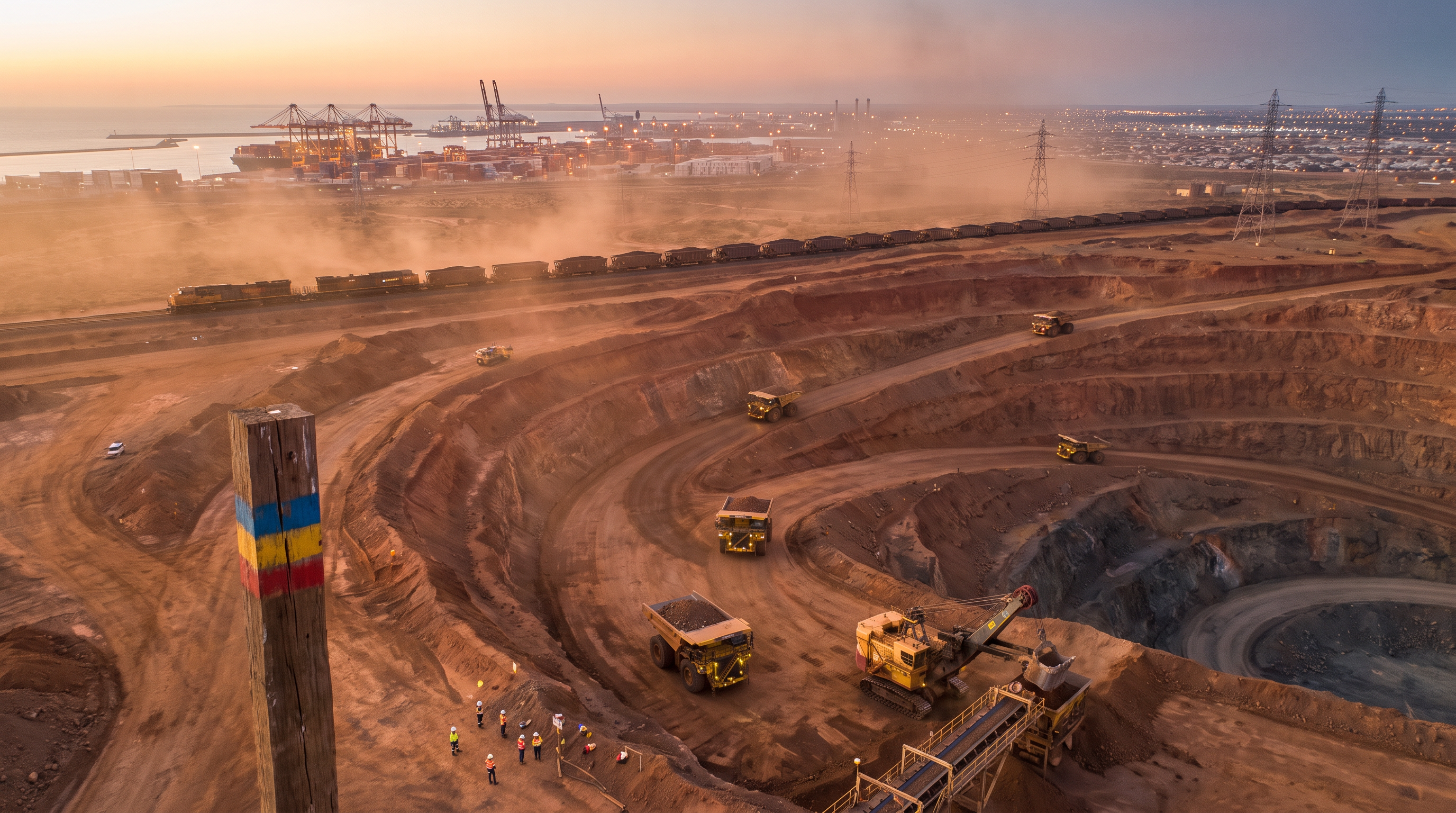


Copper broke decisively higher this week, driven by an escalating supply scare out of the Democratic Republic of Congo, aggressive tariff-driven stockpiling in the United States, and a resilient structural demand story tied to electrification and grid investment. After a month of consolidation, COMEX and LME benchmarks both pushed to fresh multi-month or record highs within days of each other — even as Wood Mackenzie's latest outlook flagged a more nuanced supply picture beneath the headline strength.
Market setting
US copper futures spiked to around US$6.90/lb (roughly US$15.2/kg, or US$15,200/t) during trading on Thursday 6 August — a fresh all-time high — before easing back into the close. That followed a record close of US$6.7030/lb (about US$14.8/kg) on Wednesday 5 August, and an even higher price briefly reached during Thursday's session of US$6.7045/lb (~US$14.8/kg), which surpassed the previous high of roughly US$6.69/lb (~US$14.7/kg) set in mid-May — a gain of about 17 percent year-to-date.
On the London Metal Exchange, three-month copper pushed through US$14,000/t (US$14.0/kg) for the first time in two months on 4 August, extended gains to around US$14,060–14,185/t (US$14.1–14.2/kg) through the week, and moved to within a few hundred dollars of January's record high of US$14,527.50/t (US$14.5/kg). Trading Economics data confirmed the acceleration, showing copper up more than 50 percent year-on-year and roughly 8.6 percent higher over the preceding week alone — a clear break from the mid-US$13,000s (~US$13.2–13.7/kg) range that defined the week ending 31 July.
Macro pressure
The dominant story of the week was Reuters' exclusive report that the Democratic Republic of Congo — the world's second-largest copper supplier and largest cobalt producer — has banned exports of copper and cobalt concentrates under a June 29 order signed by its Mines, Foreign Trade and Economy Ministers. The ban took effect immediately, one-year strategic waivers remain possible, and a new by-product tax regime (using a 55 percent valuation coefficient) phases in over three months. Reaction was split: Bloomberg Intelligence analysts said the move "has more bark than bite," estimating it puts less than 1 percent of global copper supply at risk and calling it a tightening of a long-standing waiver regime rather than a sudden shock. S&P Global separately reported that China sourced only 1.9 percent of its copper concentrate imports from the DRC in the first half of 2026, and that Kamoa-Kakula's new domestic smelter should absorb much of the affected volume; Ivanhoe Mines, the operation's part-owner, clarified that unbeneficiated concentrate export restrictions have effectively applied in the DRC for close to a decade. Even so, the headline was enough to push LME copper up as much as 1.8 percent on the day.
The concentrate market was already strained before the ban. S&P Global reported 2026 annual benchmark treatment charges were set at US$0/mt, down from US$21/mt in 2025, with the Platts spot assessment sliding to around minus US$125/mt CIF China by late June from minus US$50/mt in January — smelters, in effect, paying miners to take concentrate. CRU has flagged the same dynamic in its 2026 outlook, warning that tight concentrates and weak smelter economics are keeping bargaining power firmly with miners and could even call the LME benchmark system into question.
US tariff policy remains the other principal driver. This week's rally has been linked to positioning ahead of an anticipated decision on import tariffs from President Trump, layered on top of constrained supply and rising electrification demand. The COMEX–LME arbitrage has continued to draw metal into the US, with record COMEX inventories building even as spreads narrow from the extremes seen earlier in the year — consistent with the pattern flagged in the week ending 31 July brief.
Regional signals
Chile, the world's largest producer, delivered a more constructive signal this week: national statistics showed June output up 5.1 percent year-on-year to 447,294 metric tons, a clear rebound from May's 12.9 percent annual decline. That improvement should be read against a weak prior-year base rather than a durable ore-grade turnaround, and on its own it has not been enough to loosen the market: continued tariff-driven buying into the US, together with steady (if uneven) demand from China, kept pulling metal away from other regions and left prices unchecked.
China's underlying demand is the clearest illustration of that "uneven" picture. Growth data out of China has been mixed rather than clearly weak, but LME and Shanghai Futures Exchange inventories both fell into early August — a sign that consumption has stayed resilient enough to keep drawing down stock, even without a strong demand upswing. In other words, China isn't driving a demand boom, but nor is it pulling back; it is simply continuing to absorb metal at a steady pace, which is enough to reinforce tightness rather than relieve it. Wood Mackenzie also flagged a less obvious supply constraint this week: a halving of global sulphur supplies, compounded by China's sulphuric acid export ban, is weighing on copper and nickel production — a new wrinkle in the supply picture just as the DRC ban and the ongoing Iran-related conflict keep broader commodity-market risk elevated.
Price structure
UBS notes it has already lifted its full-year 2026 copper price forecast by 13 percent and its 2027 and 2028 projections by 4 and 3 percent respectively, to around US$6.00/lb (US$13,200/t, or US$13.2/kg), while raising its long-term incentive price by 10 percent to US$5.50/lb (about US$12.1/kg). Those targets, first flagged in June, are now being tested from above rather than below, given this week's push through US$14,000/t and toward the January record.
Wood Mackenzie's mid-year outlook — titled "twists, turns and transitions" — offers a more nuanced read than pure structural tightness. The consultancy says supply build-out for most metals has been stronger than it expected in H1 2026, "even in copper," where it now sees surpluses coming back to help balance the market, even as it flags that renewed conflict and trade restrictions are beginning to pressure inflation and could weigh on demand into H2.
Trading Economics' short-term model, cited in the prior brief, still points to 6.35 US$/lb by quarter-end and 6.96 US$/lb within 12 months — equivalent to roughly US$14.0/kg and US$15.3/kg — a trajectory this week's record COMEX price above US$6.90/lb suggests may already be running ahead of schedule.
Supply and demand
The net effect is a market being pulled in two directions at once: a genuine African concentrate disruption and aggressive US tariff-driven stockpiling are tightening near-term physical availability and pushing prices to fresh highs, even as Wood Mackenzie's updated view suggests the underlying 2026 supply build has been stronger than expected, with copper surpluses re-emerging at the margin. Weak treatment charges and CRU's warning on smelter economics suggest scarcity is concentrated at the concentrate and smelting stage rather than necessarily in refined metal.
Structural demand — grid investment, EVs, renewables and AI-driven data-centre build-out — remains intact and continues to underpin the medium-term bull case that UBS, and now a more qualified Wood Mackenzie, have both articulated. For now, though, price action is dominated by policy headlines out of Washington and Kinshasa rather than by the slower-moving supply-demand balance itself.
ConnectOre
This week's twin shocks — a concentrate export ban from a major African supplier and a tariff-driven scramble for US-bound metal — underline that supply resilience is now as much about policy risk and processing capacity as it is about ore in the ground. As the ICAA website states, ConnectOre aggregates knowledge and surfaces insights on technology and emerging research to help address key industry challenges, including zero-emission mining — exactly the kind of processing and efficiency gains this week's concentrate squeeze puts a premium on.
Go to: https://connectore.org
