


Copper: US$13,992/t (US$13.99/kg), LME official cash, 10 November. LME three-month US$13,805/t (US$13.81/kg) and COMEX about US$13,780/t (US$13.78/kg), 11 November.
Market overview
Copper posted its biggest weekly fall since March as the US midterm elections undercut two pillars of this year’s rally: the refined-copper tariff trade and the AI data-centre story. The LME official cash price fell 3.9% over the fortnight, from US$14,560/t on 29 October to US$13,992/t on 10 November. COMEX fell further, down about 6% from US$14.68/kg on 28 October, as its tariff premium drained away.
London hit an intraday low of about US$13,630/t on 6 November, its weakest since late July, and ended the week down about 2.7%. A hotter-than-expected US October inflation reading took off another 1.6% on 10 November, as markets began pricing a possible Fed rate rise in December. Copper recovered 0.9% on 11 November as AI stocks rebounded after CoreWeave’s results.
Funds have stepped back. The COMEX net long has fallen to 34,444 contracts, from 82,649 in mid-September. Even so, prices remain about 23% higher than a year ago and about 7% below September’s record.
Impact of the US midterm elections
Democrats won both chambers of Congress on 3 November. Copper felt the result through two channels.
Tariffs. The Commerce Department’s recommended tariff on refined cathode — 15% from January 2027, rising to 30% in 2028 — has still not been approved. Saxo Bank’s Ole Hansen says the election result lowers the odds of that tariff, and that this matters more for prices in the near term than any shift in long-run demand. TD Securities adds that cost-of-living concerns ahead of the 2028 presidential election reduce the appetite for aggressive duties. Deutsche Bank cautions that Section 232 tariffs remain within the President’s power, so the risk is reduced, not removed.
The COMEX–LME spread shows the shift. COMEX traded more than US$700/t above LME in August and US$200–250/t above it a fortnight ago. That premium has now all but gone: on 11 November COMEX sat about US$25/t below LME three-month. With no premium left, there is little incentive to ship more copper into the US.
Data centres. Goldman Sachs estimates that states where Democratic lawmakers are more likely to restrict data centres account for about 45% of planned US capacity. The Economist, citing CSIS estimates, notes that existing US metals tariffs could add US$130 billion to planned data-centre construction costs by 2030. Both point to slower and costlier US build-outs. Some projects may be relocated or delayed rather than cancelled, but the demand impact is not yet clear.
Inventories and physical market
The gap between a well-stocked United States and a tight China widened. COMEX stocks reached a record of about 732,000 t. LME stocks rose 16% in a fortnight, from 274,000 t on 30 October to 316,625 t on 10 November, and 70.1% of LME stocks now sit in US warehouses — the highest US share since March 2019.
In China, Shanghai Futures Exchange warehouse stocks fell 24% in the week to 6 November, to 33,848 t, down from about 54,000 t in late October. That is the lowest level since early January 2024 and less than a day of Chinese consumption. These figures cover exchange warehouses only; bonded and other stocks in China are not included.
Estimates of the US share of global stocks vary with how they are measured. The FT puts it at about 90% of combined LME and COMEX stocks, up from 20% two years ago. Reuters puts it at 85% across all three exchanges, and Morgan Stanley at about 80% of visible inventory. TD Securities estimates total US holdings, on and off exchange, at about 1.6 Mt.
China is paying up. The Yangshan import premium held at a record US$230/t for a third day on 11 November, up from US$188/t on 27 October. LME cash traded at a premium of about US$195/t to three-month, reflecting scarce nearby metal outside the US. Newly arrived US metal is now going into bonded LME warehouses rather than clearing customs, so it could still be shipped to Asia if Chinese bids hold.
Demand and supply
Demand. Physical demand is holding up better than sentiment. Chinese buyers are restocking while local smelters cut output in response to high ore costs and thin margins. In the US, distributor Border States says data-centre projects are still stretching lead times, with copper prices up 35% on a year ago. The main headwind is macroeconomic: hot US inflation has markets pricing a 25bp, or even 50bp, Fed rise in December, which is lifting the US dollar.
Supply. Mine supply remains tight. ICSG data show world mine output down 0.9% in January–August, with Indonesian concentrate output down 29% and DRC concentrate down 26%. Wood Mackenzie expects Chilean output to fall 5.2% this year. CRU puts spot treatment charges near minus US$300/t, improving only to minus US$75/t by late 2027, as talks on the 2027 benchmark begin from this year’s US$0. BHP’s September-quarter copper output fell 19% to 400,700 t after bad weather in Chile and a conveyor failure at Carrapateena.
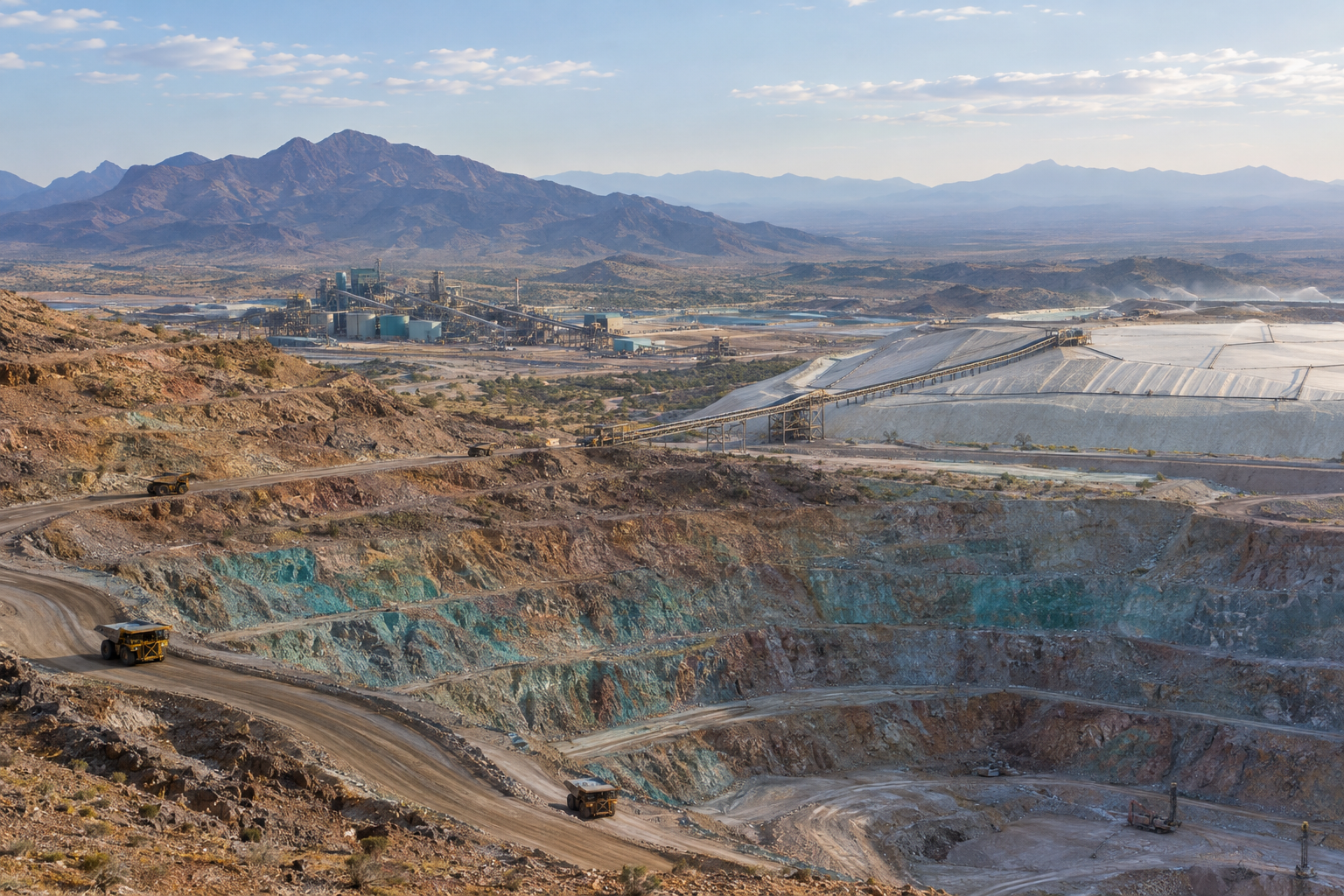
Freeport-McMoRan. The Economist this week examines how Freeport plans to grow without new mines. On 4 November its board approved a US$4.5 billion expansion of Bagdad in Arizona, which will double output from about 91,000 t to 181,000 t a year over almost four years. Trials to leach copper from old stockpiles begin next year, and Grasberg — running at about 67% of normal mill rates in the September quarter — is expected to fully recover by late 2027. Freeport targets 2.0–2.3 Mt a year by 2030, up from about 1.4 Mt in 2026. The wider lesson: much of this decade’s new copper is likely to come from brownfield expansions and new processing technology rather than new discoveries.
Market outlook We expect copper to consolidate between about US$13,300/t and US$14,300/t (US$13.30–14.30/kg) until Washington’s tariff intentions are clearer. TD Securities says a further US$500/t drift lower would not surprise, though China’s physical tightness should help limit the downside. Watch the December Fed meeting, any news on refined-copper tariffs, and the 2027 treatment-charge talks.
ConnectOre – a technology update
More copper from what is already mined. Freeport’s plan shows where many of the next tonnes will come from: leaching low-grade stockpiles and expanding existing operations, not only new discoveries. Australia has mature mines and large legacy stockpiles, so these technologies could deliver copper years sooner than greenfield projects, which can take 17–20 years to develop. ConnectOre, ICAA’s digital knowledge platform, tracks research on stockpile and heap leaching, processing efficiency, water and zero-emission mining. It also supports the ICAA–UNSW strategy paper on cutting project development time from about 20 years towards 12. Visit: connectore.org
