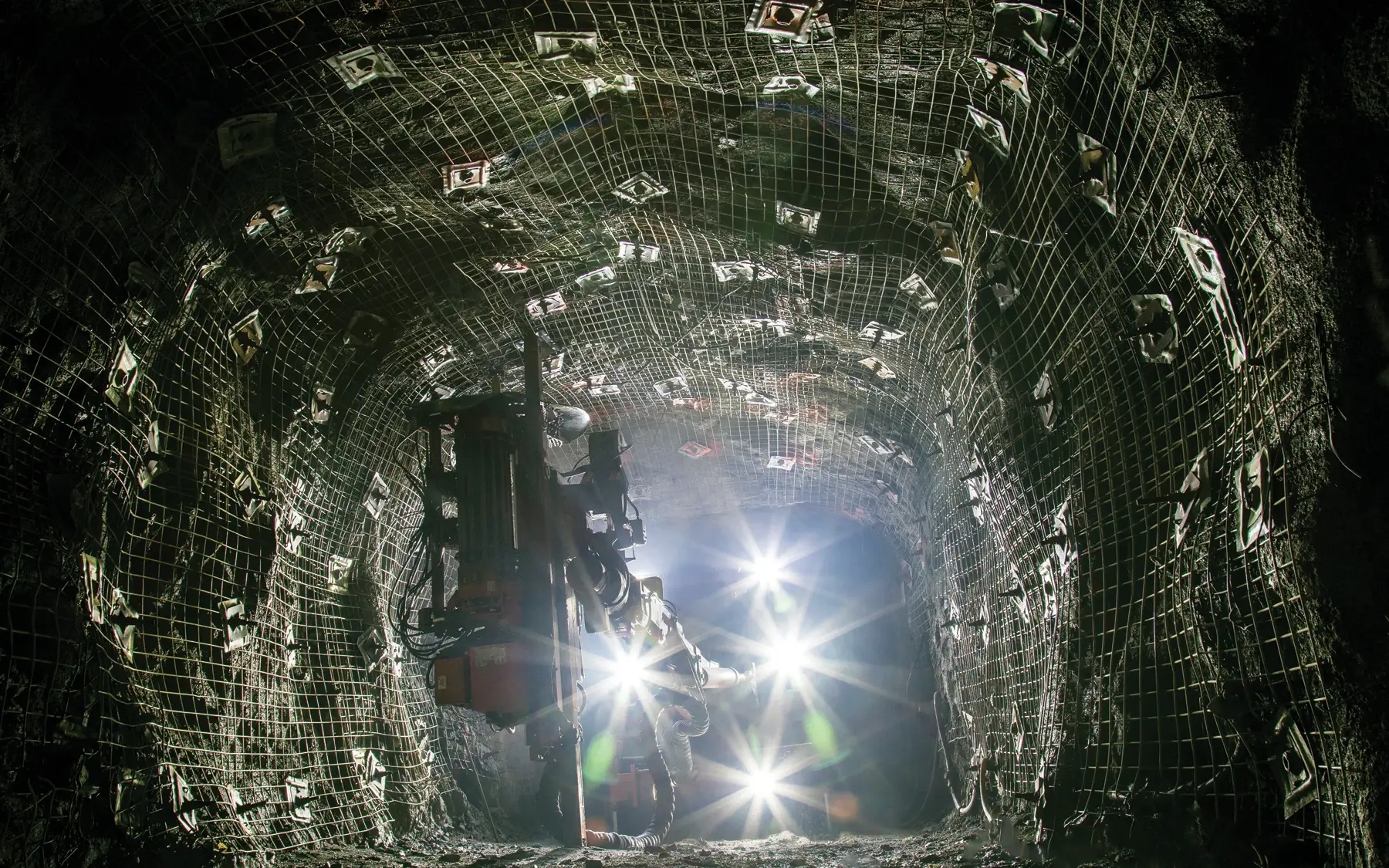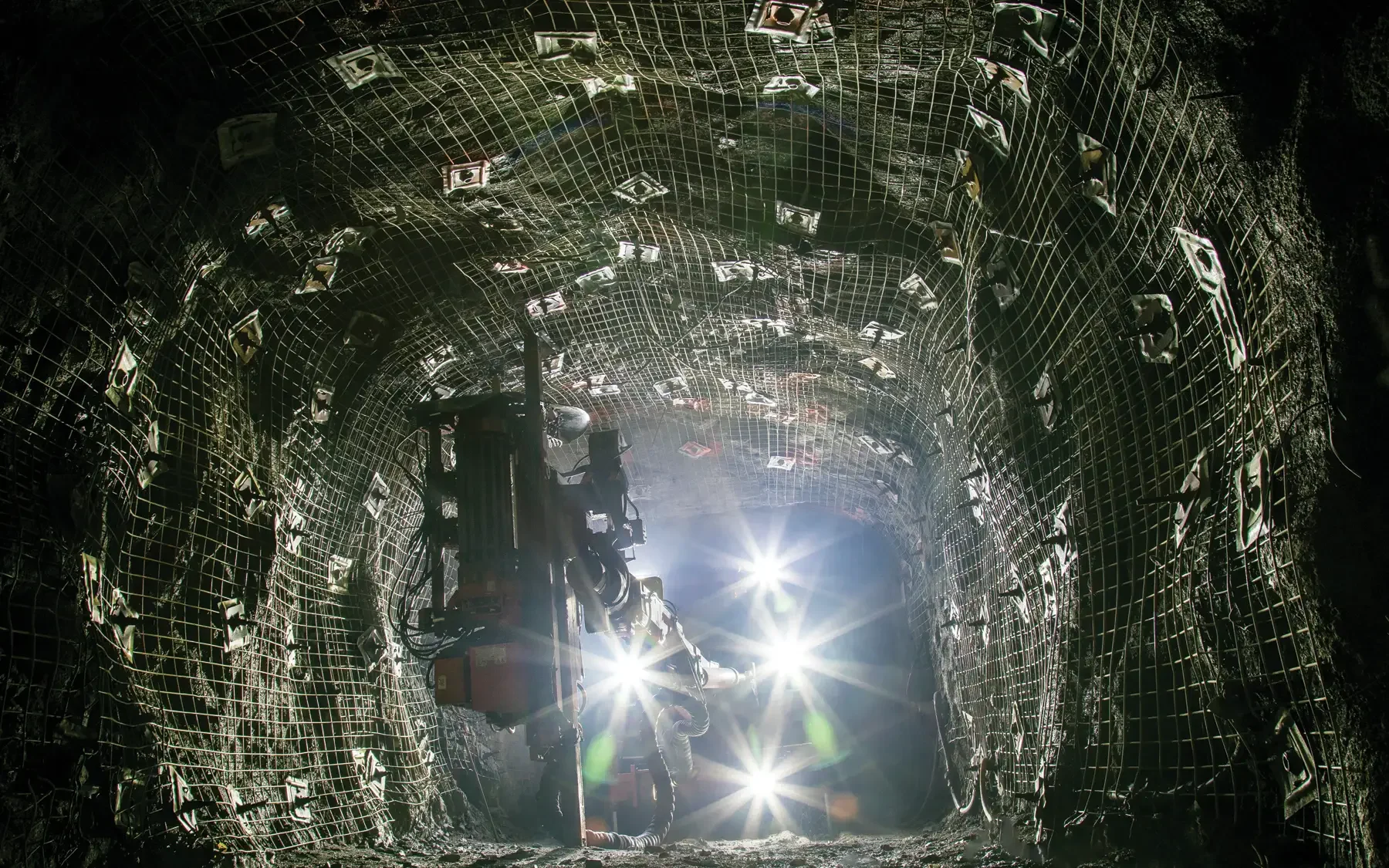


Block cave mining is an underground hard rock mining method typically used in large, lower-grade orebodies with substantial vertical dimensions. In block caving, a large section of the orebody is initially undercut through drilling and blasting, which creates a large unsupported roof that will start to collapse from its own instability and weight.
Broken ore falls into pre-constructed funnels known as ‘drawbells’ and is then collected at extraction ‘drawpoints’. The method exhibits low operating costs that are comparable with open pit mining and, as a result, is a consideration for extending the life of open pit operations. Block cave operations can cost one-tenth of other underground methods, due to economies of scale where production rates can reach 100,000 tonnes per day.6 Additionally, drilling and blasting costs are less as no backfilling is required.
Key design factors required to support the block caving method include:
Massive deposit with large vertical height and footprint area to propagate the natural failure/caving of the rock mass.
Geomechanical properties favourable to induce ‘natural’ caving, such as manageable ground stresses, in situ fractures to promote fragmentation during the caving process and rock mass strength to support draw points over the life of the mine.
Surface disturbance above the cave must be planned and accepted, and as a ‘rule of thumb’, the ore value should be two times the site operating costs.
There is a notable trend towards adopting block caving methods, especially for exploiting deeper orebodies that are beyond the reach of conventional mining techniques. The method is distinguished by its cost efficiency and high production capabilities, aligning well with large-scale and geologically uniform copper deposits. Technological advancements have significantly enhanced the feasibility and safety of block caving, although it requires substantial upfront capital and considered planning. The application of block caving in deep copper deposits is expected to increase in the future where cave airflow behaviour is a growing area of interest to optimise the mining method and support the ventilation system design.